“coffee-producing country” search results (1000)

Introduction of high-quality coffee beans in Peruvian coffee-producing countries in planned coffee growing areas
Peruvian coffee is grown in a planned way, which has greatly increased coffee production. Its rich acidity and mellow smoothness are its most prominent features. Peruvian coffee has a soft sour taste, medium texture, good taste and aroma, and is an indispensable ingredient in the production of comprehensive coffee. High-quality Peruvian coffee with a strong aroma, smooth, layered and full-bodied
2016-07-13 Planning coffee cultivation region Peru producing country boutique coffee beans introduction
What are the categories of coffee in the main coffee-producing countries
Brown trees are very similar to laurel and usually grow in the area between the Tropic of Cancer and the Tropic of Cancer. A coffee tree usually grows for about three to four years before it begins to bear fruit. the fruit is a red berry and a small number of yellow berries. After drying and removing the pulp, the coffee beans can be separated. There are shadows of coffee beans all over the world, as long as the climate is right.
2016-06-08 Coffee main state-owned which classification coffee laurel extremely similar evergreen
Introduction to the geographical environment of coffee-producing countries in Rwanda in Africa
To the northwest of Rwanda, there is the towering Virunga Virunga Mountains. Several major volcanoes in the Virunga Mountains are all above 3500 meters above sea level, with the highest peak of 4500 meters above sea level and covered with snow all the year round. The jungles of the Virunga Mountains, the main habitat for mountain chimpanzees, are currently endangered but are still not effectively protected. Suffer from this
2016-06-27 Africa Rwanda coffee producing country geography introduction boutique coffee beans
Santa Cruz Manor, a coffee-producing country in the Galapagos Islands, formed by volcanic eruptions
The Galapagos Islands are formed by volcanic eruptions, with tall volcanoes standing on the island, the highest on Isabella Island (Isabel), the largest in the archipelago, called Wolf Volcano (1707 meters), and the second highest is an extinct volcano, also on the island, Mount Asul (1689 meters). The natural lakes formed by some craters seem to be embedded in the summit of volcanoes.
2016-06-20 Volcano eruption formation Lapa Goss archipelago coffee producing country Crewe manor
An introduction to the flavor of the manor in El Salvador, the smallest coffee-producing country in Central America.
The civil war in 1980 caused government forces and guerrillas to deal a blow to the coffee industry, as well as natural disasters, as well as the collapse in international raw bean prices between 1986 and 1987, all of which adversely affected the coffee industry. in fact, 80 years ago, the foreign exchange earned by coffee also assisted the country's clothing industry and contributed to the Ministry of Light Industry. And the marketing and export controlled by the government are even more disadvantageous to the whole industry.
2016-07-14 Central America area small El Salvador coffee producing country manor producing area flavor
Tarasu, a valley in the central mountains of Costa Rica's coffee-producing region.
Excellent Costa Rican coffee is called extra hard beans, and this kind of coffee can grow at an altitude of more than 1500 meters. Altitude has always been a problem for coffee growers. The higher the altitude, the better the coffee beans, not only because the higher altitude can increase the acidity of the coffee beans and thus increase the flavor, but also because the night temperature at the higher altitude is lower, which can make the trees grow slowly.
2016-06-20 Costa Rica coffee producing areas central mountainous western valley Tara excellent
Arusha, a coffee-producing region in the highlands of northern Tanzania
In the past, the coffee industry in Tanzania has been dominated by manor cultivation, but now more than 85% are grown by small farmers. Many small farmers are combined into cooperative organizations, the most important of which is the Kilimanjaro Cooperative Alliance (Kilimanjaro Cooperative Union, referred to as KNCU). Tanzanian coffee is auctioned by the Tanzanian Coffee Management Committee (Tanz)
2016-06-17 Tanzania north original region coffee producing area Arusha past
The coffee-growing area around the active volcano introduces the coffee-producing areas of Guatemala.
The aroma of coffee liberates all forms, hearts and national boundaries. Through coffee, the mood leaves the country at any time and lands in a strange country half a world away. Even at the end of the world, you can share a mood. Antigua was the capital of the Spanish colonial period in 1543. Although this emerald-like valley has been in all directions, layers upon layers, deliberately waiting for development and crisis since ancient times.
2016-06-23 Active volcano around coffee growing area Guatemala producing area introduction Artie Teran
Coffee farmers are more accustomed to using water washing treatment to introduce the coffee production environment of Nicaraguan coffee-producing countries.
The suitable climate provides an excellent growth environment for the cultivation of coffee. The mineral-rich pozzolanic soil provides abundant nutrients for the cultivation of coffee trees. High-quality Nicaraguan coffee is also grown in the northern and central highlands of the country. The best coffee is produced in Matagalpa (Matagalpa), which is highly respected by coffee lovers all over the world.
2016-06-28 Coffee farmers habits use washing treatment Nicaragua producing country production ring
Exudes a faint and elegant fragrance an introduction to the Colombian coffee-producing Andes
Columbia coffee foreign name Colombian Coffee also known as the main raw materials of jade coffee Arabica coffee beans, robusta coffee, washed coffee beans (Washedbeans) contain preservatives no main edible efficacy can prevent radiation injury, health care function suitable for people generally healthy people can drink, suffering from cardiovascular disease
2016-06-20 Radiate light elegant fragrance Columbia coffee producing areas Andes mountains
Burman Manor, a coffee-producing area of Kenya, introduces the characteristics of Kenyan coffee.
Kenyan coffee beans the Kenyan government takes the coffee industry very seriously, where it is illegal to cut down or destroy coffee trees. Kenyan coffee buyers are world-class high-quality coffee buyers, and no other country can grow, produce and sell coffee on a continuous basis like Kenya. All coffee beans are first made by the Kenya Coffee Commission (CoffeeBoardofKenya, CB for short)
2016-08-05 Black plum fragrance Kenya coffee manor producing area Berman introduction characteristics flavor
Introduction to Paradise Bird Manor in Wiki Valley, a coffee-producing area of Papua New Guinea.
The frost in 1975 destroyed most coffee crops in Brazil, but it affected the development of the coffee industry in Papua New Guinea. * * A scheme has been implemented to subsidize rural or collective landowners to create about 20 hectares of coffee plantations. This measure has indeed increased the penetration of coffee in the local economy, and by 1990, the annual output had reached 1 million bags. However, hardly ever.
2016-06-20 Taste mellow Papua New Guinea Coffee producing area Wiki Valley Bird of Paradise
Introduction to Paradise Bird Manor in Wiki Valley, a coffee-producing area of Papua New Guinea with a humid and rainy climate
The coffee production in Papua New Guinea is not very high, and its coffee beans are carefully washed Arabica beans. Generally washed coffee beans are full of bright fruit aromas, but do not have a strong acidity. It is characterized by a silky soft taste and excellent aroma, moderate acidity, and is a relatively rare variety of high-alcohol and medium-acidity coffee, regardless of
2016-07-04 Climate high humidity rainy Babu Guinea coffee producing areas wiki valley paradise
Nicaraguan Coffee Flavor Manor production area introduces Joy Manor
In February this year, I joined a delegation of Nicaraguan coffee buyers. Over the past nine years, I occasionally visited the coffee-producing areas of Nicaragua, but this time, I felt the sinister impact that the Nicaraguan coffee industry is facing. The persistently depressed coffee prices have a serious impact on the Nepalese economy, but even with such obstacles, people in this place still hold.
2016-07-25 Nicaragua coffee flavor manor producing area taste introduction joy this year two
Boutique coffee Fraijanes,Guatemala City, a coffee-producing area in Guatemala
The extra-hard coffee beans here are full-grained, delicious and balanced, and the coffee made with them is pure and rich. Guatemala coffee once enjoyed a reputation as the best quality coffee in the world, but its quality also declined for a time. What is gratifying, however, is that its reputation is gradually being restored. In 1750, Father Jesuit introduced coffee trees to Guatemala, at the end of the 19th century.
2016-05-12 Boutique coffee Guatemala producing area Fraijanes Guatem
Boutique coffee Fraijanes,Guatemala City, a coffee-producing area in Guatemala
The extra-hard coffee beans here are full-grained, delicious and balanced, and the coffee made with them is pure and rich. Guatemala coffee once enjoyed a reputation as the best quality coffee in the world, but its quality also declined for a time. What is gratifying, however, is that its reputation is gradually being restored. In 1750, Father Jesuit introduced coffee trees to Guatemala, at the end of the 19th century.
2016-05-13 Boutique coffee Guatemala producing area Fraijanes Guatem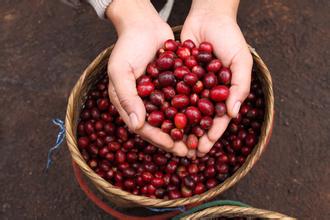
Boutique coffee Fraijanes,Guatemala City, a coffee-producing area in Guatemala
The extra-hard coffee beans here are full-grained, delicious and balanced, and the coffee made with them is pure and rich. Guatemala coffee once enjoyed a reputation as the best quality coffee in the world, but its quality also declined for a time. What is gratifying, however, is that its reputation is gradually being restored. In 1750, Father Jesuit introduced coffee trees to Guatemala, at the end of the 19th century.
2016-05-13 Boutique coffee Guatemala producing area Fraijanes Guatem
Boutique coffee Fraijanes,Guatemala City, a coffee-producing area in Guatemala
The extra-hard coffee beans here are full-grained, delicious and balanced, and the coffee made with them is pure and rich. Guatemala coffee once enjoyed a reputation as the best quality coffee in the world, but its quality also declined for a time. What is gratifying, however, is that its reputation is gradually being restored. In 1750, Father Jesuit introduced coffee trees to Guatemala, at the end of the 19th century.
2016-05-15 Boutique coffee Guatemala producing area Fraijanes Guatem
Boutique coffee Fraijanes,Guatemala City, a coffee-producing area in Guatemala
The extra-hard coffee beans here are full-grained, delicious and balanced, and the coffee made with them is pure and rich. Guatemala coffee once enjoyed a reputation as the best quality coffee in the world, but its quality also declined for a time. What is gratifying, however, is that its reputation is gradually being restored. In 1750, Father Jesuit introduced coffee trees to Guatemala, at the end of the 19th century.
2016-05-15 Boutique coffee Guatemala producing area Fraijanes Guatem
Introduction of boutique coffee beans in Wiki Valley, a coffee-producing region of Papua New Guinea
The frost in 1975 destroyed most of Brazil's coffee crops, but it boosted the industry. * * A scheme has been implemented to subsidize rural or collective landowners to create about 20 hectares of coffee plantations. This measure has indeed increased the penetration of coffee in the local economy, and by 1990, the annual output had reached 1 million bags. However, it is almost inevitable that production will soar.
2016-06-17 Papua New Guinea coffee producing areas wikis valleys introductions boutiques coffee beans